Six strong works are enough: Caravan, Chess, Flea, Kobzar, Peace!, Padlock.
Where the invisible becomes visible
The museum
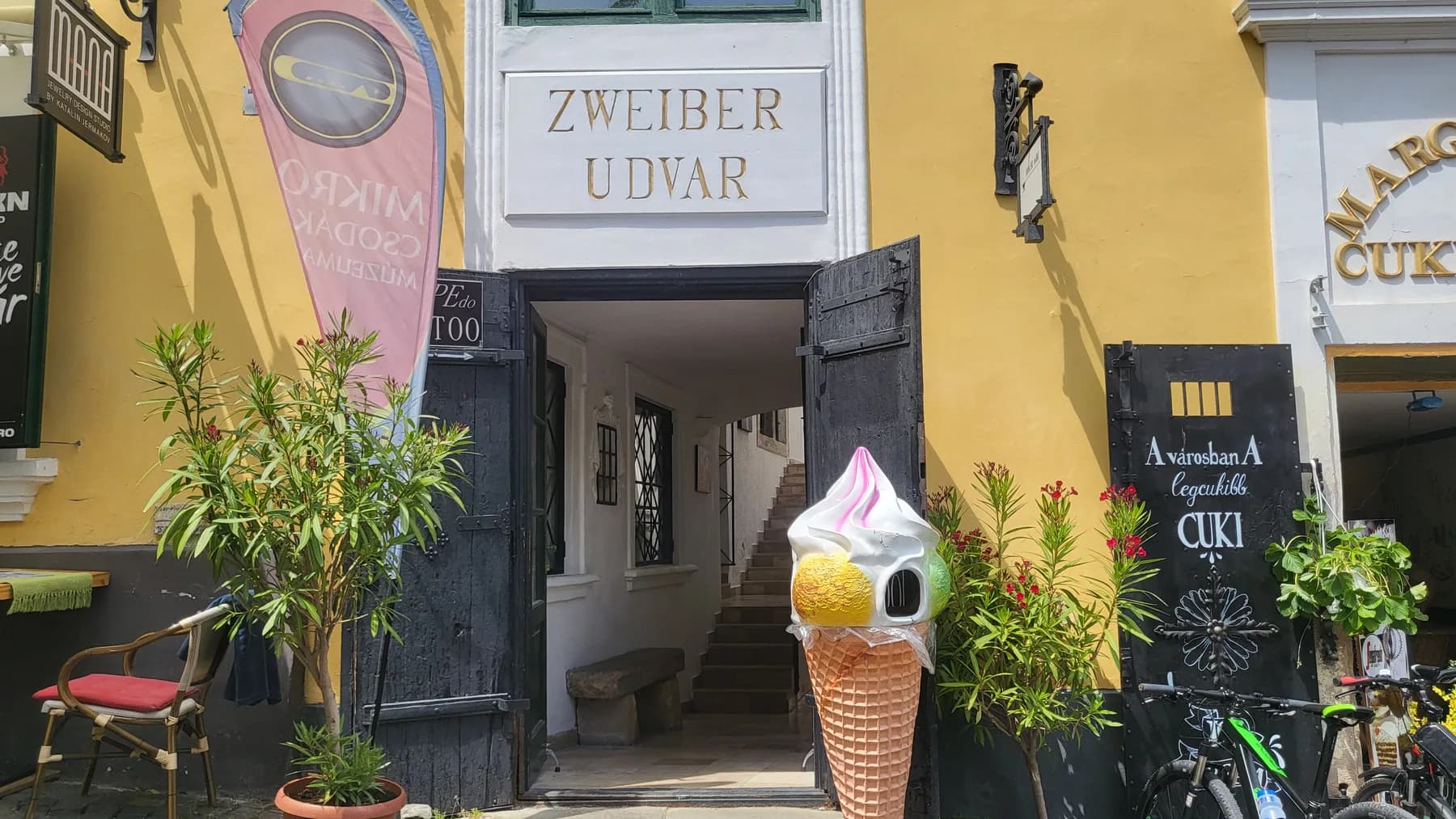
The MikroCsodak Museum presents original micro-miniature works by Mykola Syadristy. The objects are not enlargements or replicas: visitors look at the real works through microscopes.
For groups, the experience is compact but powerful. It works well in rainy weather, winter programmes and classic Szentendre walking routes.
Syadristy’s works were already shown in Budapest in 1972, then appeared in Szentendre in 1999. In 2005 the collection found its permanent home in Gorog Street.
Szentendre is also a personal choice: Syadristy’s friendship with artist Andras Kutlan, who lived in Szentendre, helped connect the collection with Hungary and the wider world.
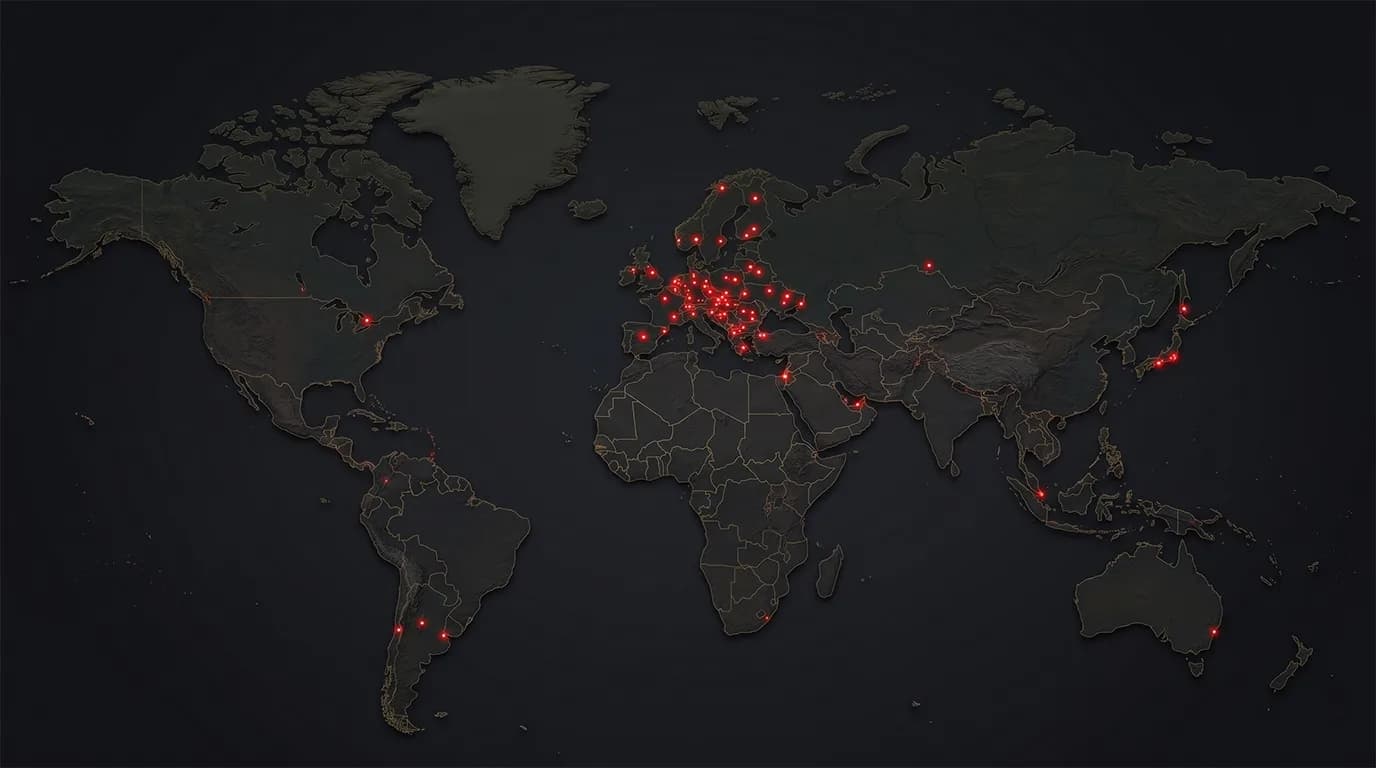
Permanent Syadristy exhibitions exist in only a few places; Kyiv, Andorra and Szentendre are the key permanent destinations.
Guinness Record recognition
Tripadvisor Travellers’ Choice status
Central old-town location
15 original works under individual microscopes
The polymath
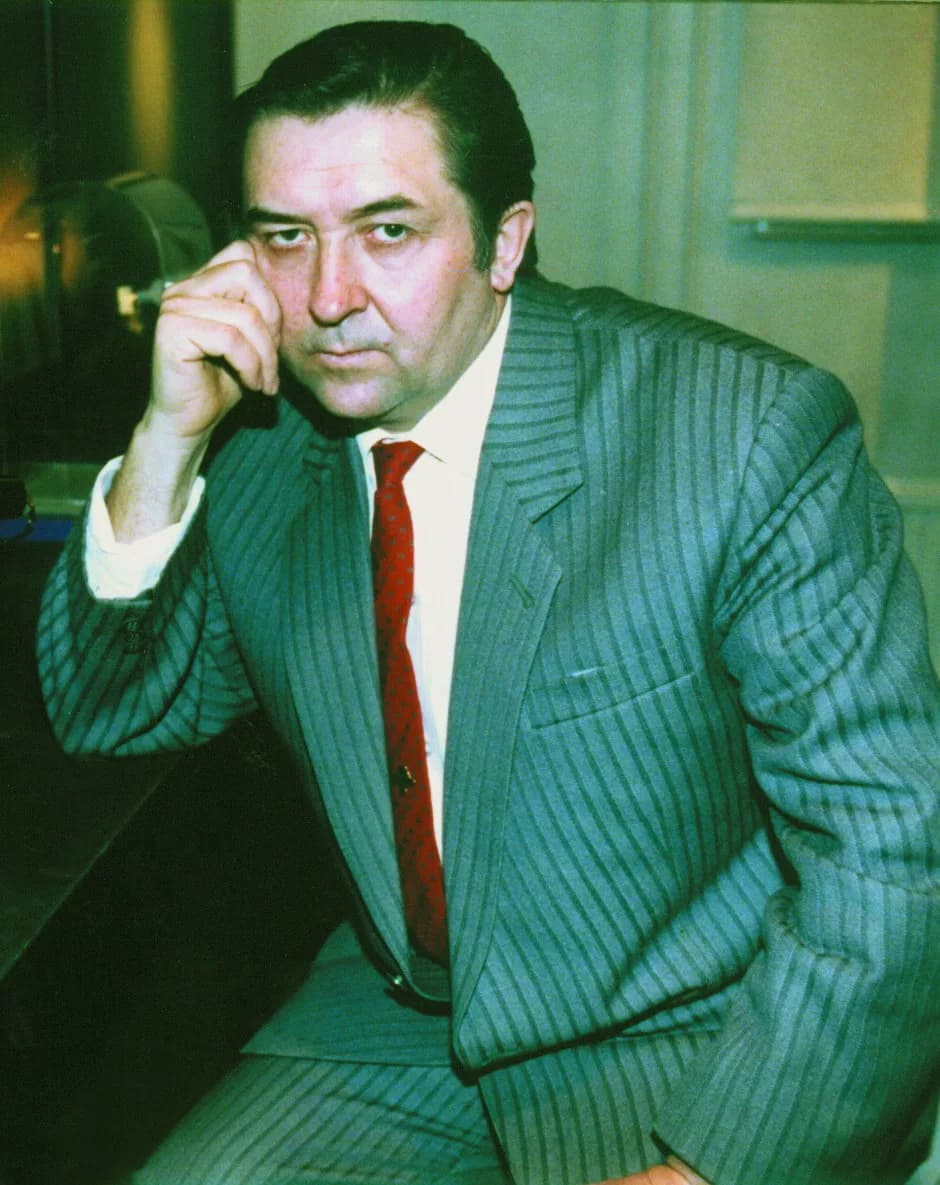
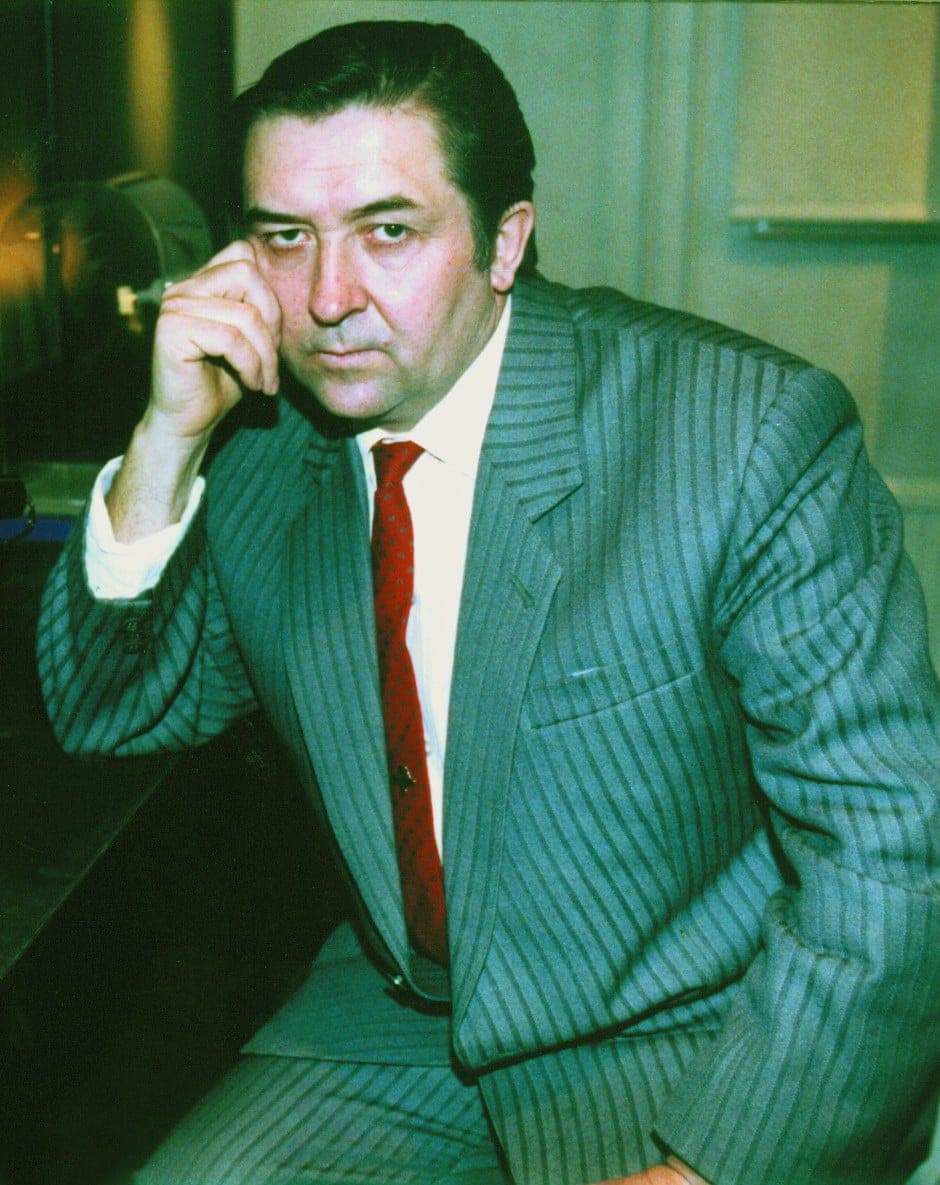
Mykola Syadristy
Syadristy is an artist, precision-minded maker, sports champion and poet. The word micro-miniature itself is tied to his life’s work.
At this scale, breathing and heartbeat can move a tool. The discipline behind the works is physical control as much as technical mastery.
Born in Ukraine in 1937, he combined artistic and engineering education; that dual view shaped a practice where idea, material and structure must work together.
As an underwater sports champion he developed exceptional breath control and bodily discipline, which later became part of his creative method.
He also researched the history of twentieth-century totalitarian systems and authored inscriptions for the Holodomor memorial in Kyiv.
People’s Artist of Ukraine
Decades of micro-miniature work
Gold, platinum, seed shell, hair and spider web
Artist, engineer, sports champion and poet
The question everyone asks
How are they made?
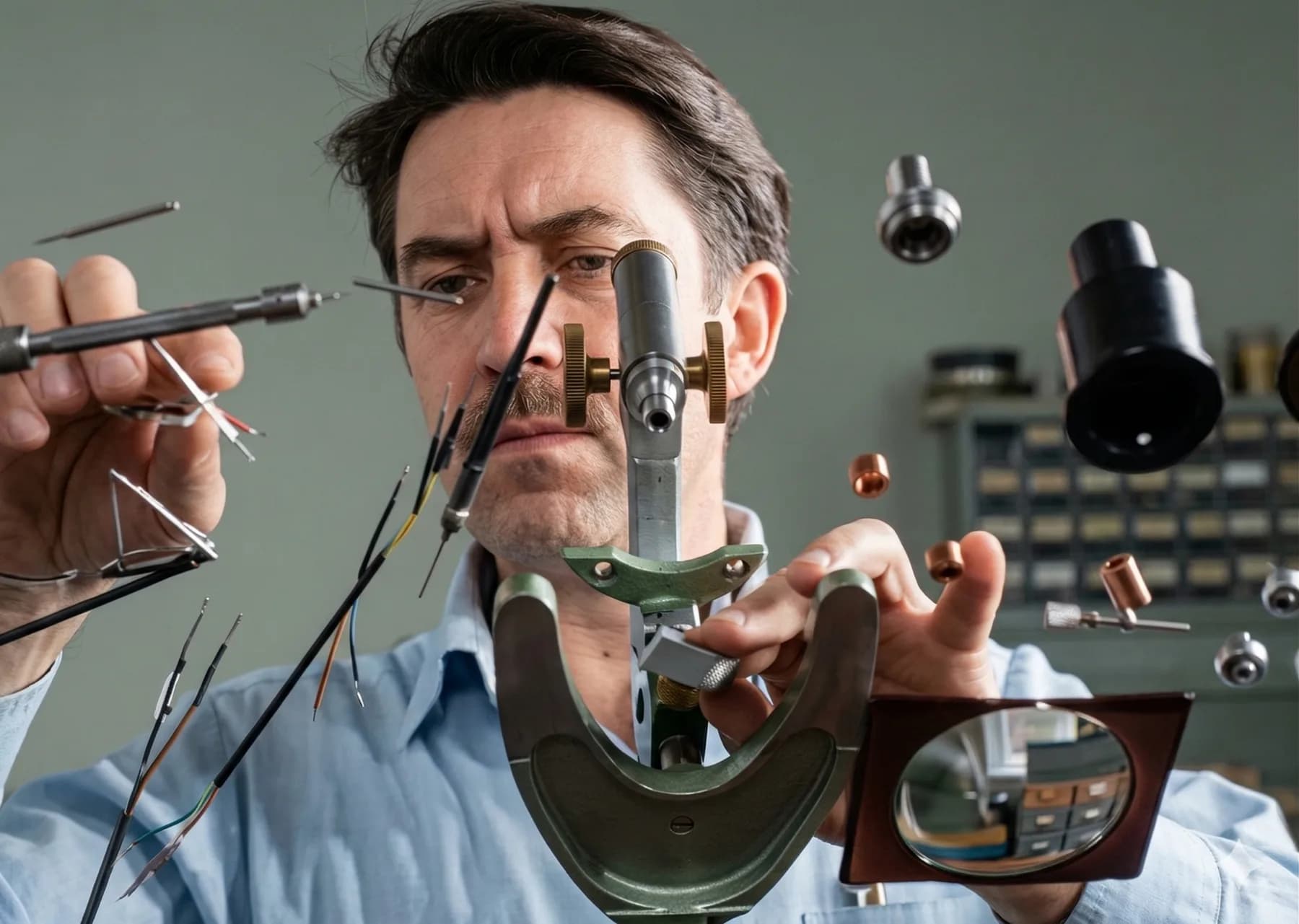
Many works required their own tools: tiny drills, blades, chisels and holding devices. Preparing the tool could be harder than creating the object itself.
A useful guiding point: these pieces are not only tiny. They are real compositions, often assembled from separate elements with mechanical logic.
Microscopic cutting tools are disturbed by breathing and heartbeat. The most critical movements are made in the pause between two heartbeats.
Syadristy has no permanent toolset. For each work he creates, sharpens and adapts special tools at microscopic scale.
One work can take half a year to a year of daily labour, plus weeks or months spent discovering the specific technology the piece requires.
Work between two heartbeats
Custom micro-tools
Real materials, real structures
Gold, platinum, seeds, rice, sugar, hair, spider web and glass
Under microscopes
The 15 works
The full exhibition order is shown as open visual cards: easy to scan, but the guide notes stay intact.
1. · 1974
Caravan
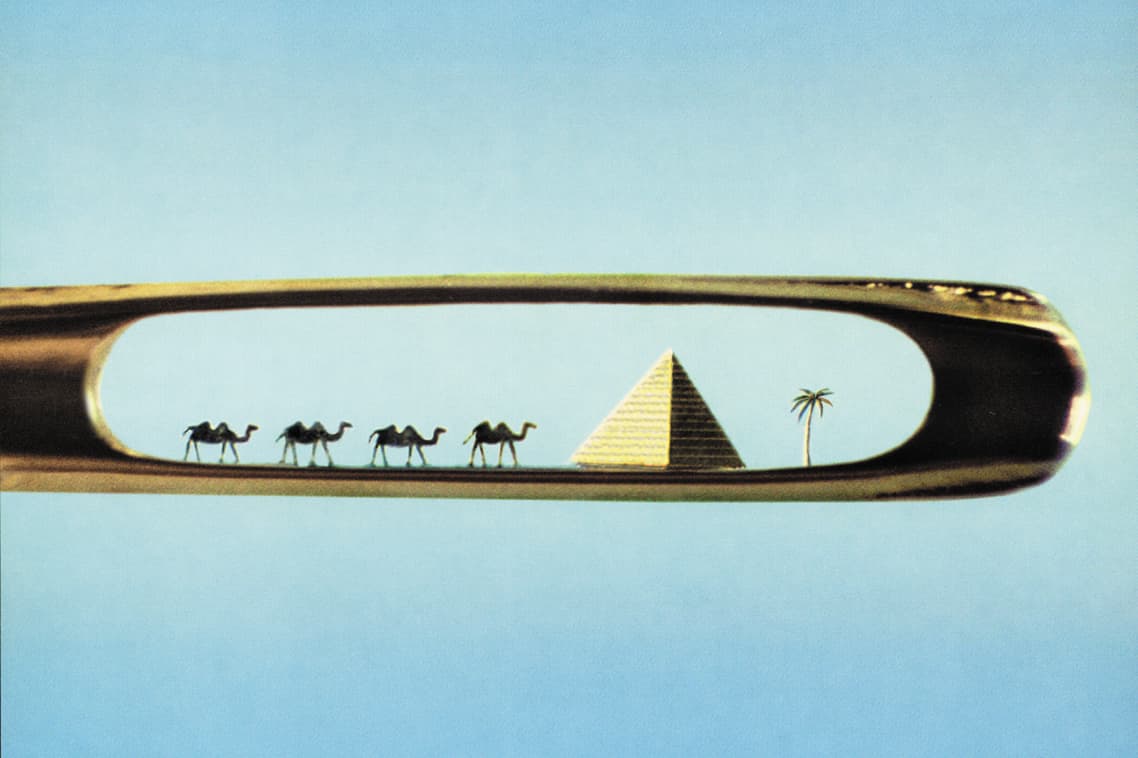
A camel caravan with a palm tree and pyramid in the eye of an ordinary sewing needle.
Say this
The legs of one camel are only about 5 microns thick. A strong guide moment is to show a real needle before visitors look through the microscope.
If they ask
Maker challenge
The four camels, the palm tree and the pyramid are separate gold elements. Before fixing, even a small air current could have moved them.
Scale
One camel leg is about 5 microns thick, many times thinner than a human hair. The whole scene could fit on a poppy seed.
Meaning
The work turns the biblical image of the camel passing through the eye of a needle into a literal microscopic scene.
Guide cue
Show visitors a real sewing needle before they look through the microscope. The scale becomes immediate.
2. · 1979
Flowering branch
A watercolour branch painted inside a halved apple seed.
Say this
The tiny brush is traditionally described as being made from newborn mouse down. The work shows that micro-miniature is not only metalwork.
If they ask
Maker challenge
The apple seed had to be cut, polished inside and prepared as a tiny curved exhibition room for a stretched sheet of paper.
Brush story
Tradition says the brush was made from newborn mouse down: five hairs for the brush head, a sixth to tie them together.
Meaning
A flowering branch inside a seed suggests the cycle of nature: a whole tree hidden inside something tiny.
Why it matters
This is one of the rare works where Syadristy used the language of painting rather than metal sculpture.
3. · 1973
Chess
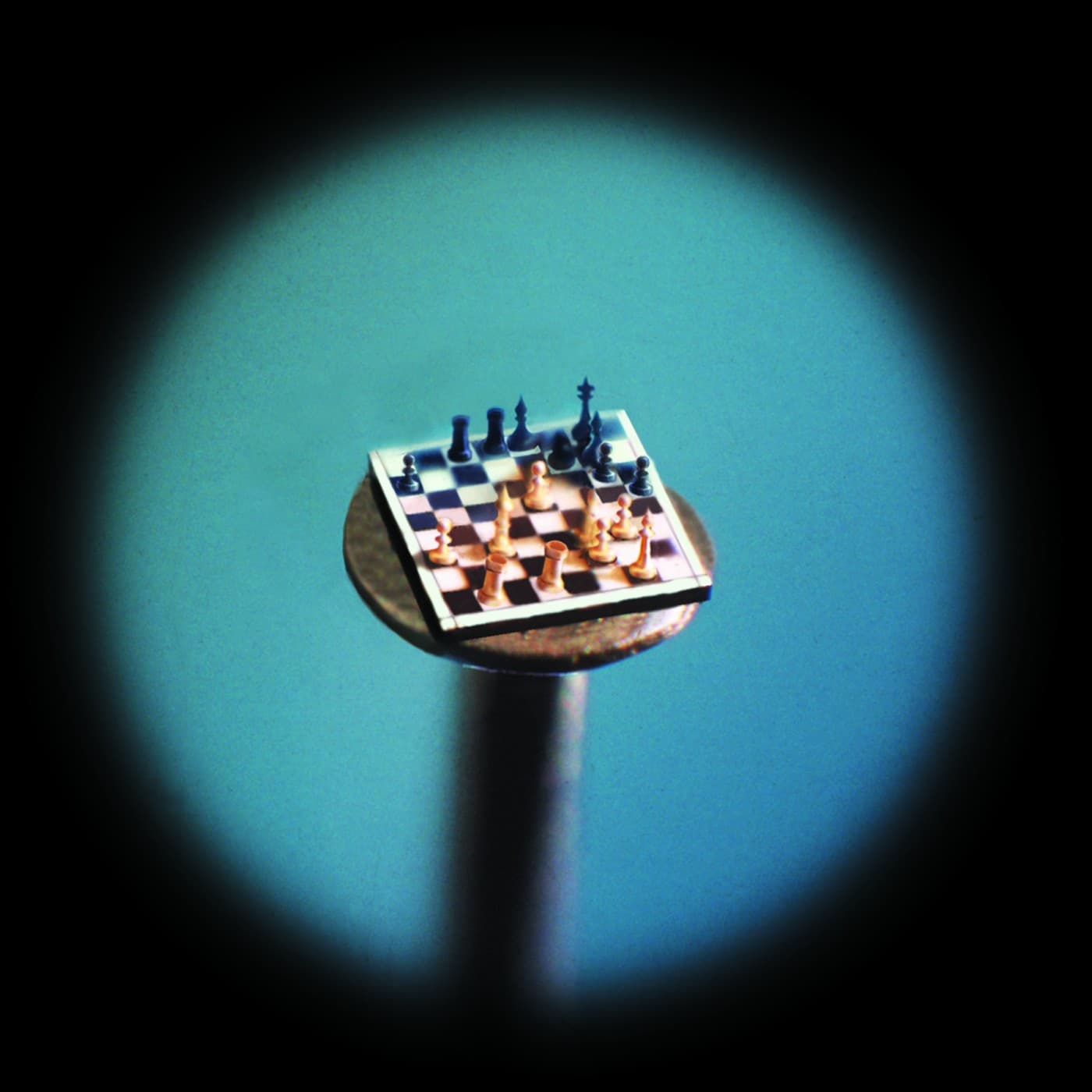
The world’s tiniest chess set on the head of a pin.
Say this
The 64 squares are not painted: they are separate pieces of gold and darkened Damascus steel.
If they ask
Maker challenge
The 32 pieces had to be shaped one by one and placed on a 2 x 2 mm chessboard.
The board
The 64 squares are not painted. They are separate gold and darkened Damascus steel elements fitted into a grid.
Meaning
The position refers to a famous chess-history moment from the 1927 Alekhine-Capablanca world championship match.
Guide cue
For chess players, ask: “Who is winning?” The miniature becomes a game situation, not only an object.
4. · 2002
Coca-Cola bottle
A gold Coca-Cola bottle, 1.65 mm high, with a 0.7 mm logo.
Say this
A familiar object helps visitors immediately understand the scale: pop culture meets classical goldsmithing.
If they ask
Maker challenge
The raised Coca-Cola lettering had to be engraved onto an already microscopic curved gold surface.
Scale
The bottle is 1.65 mm high and the logo is 0.7 mm. Its familiar shape makes the scale instantly readable.
Meaning
A playful meeting between modern pop culture and classical goldsmithing.
Group value
Because everyone knows the bottle, this work helps visitors understand the entire exhibition’s scale.
5. · 1959
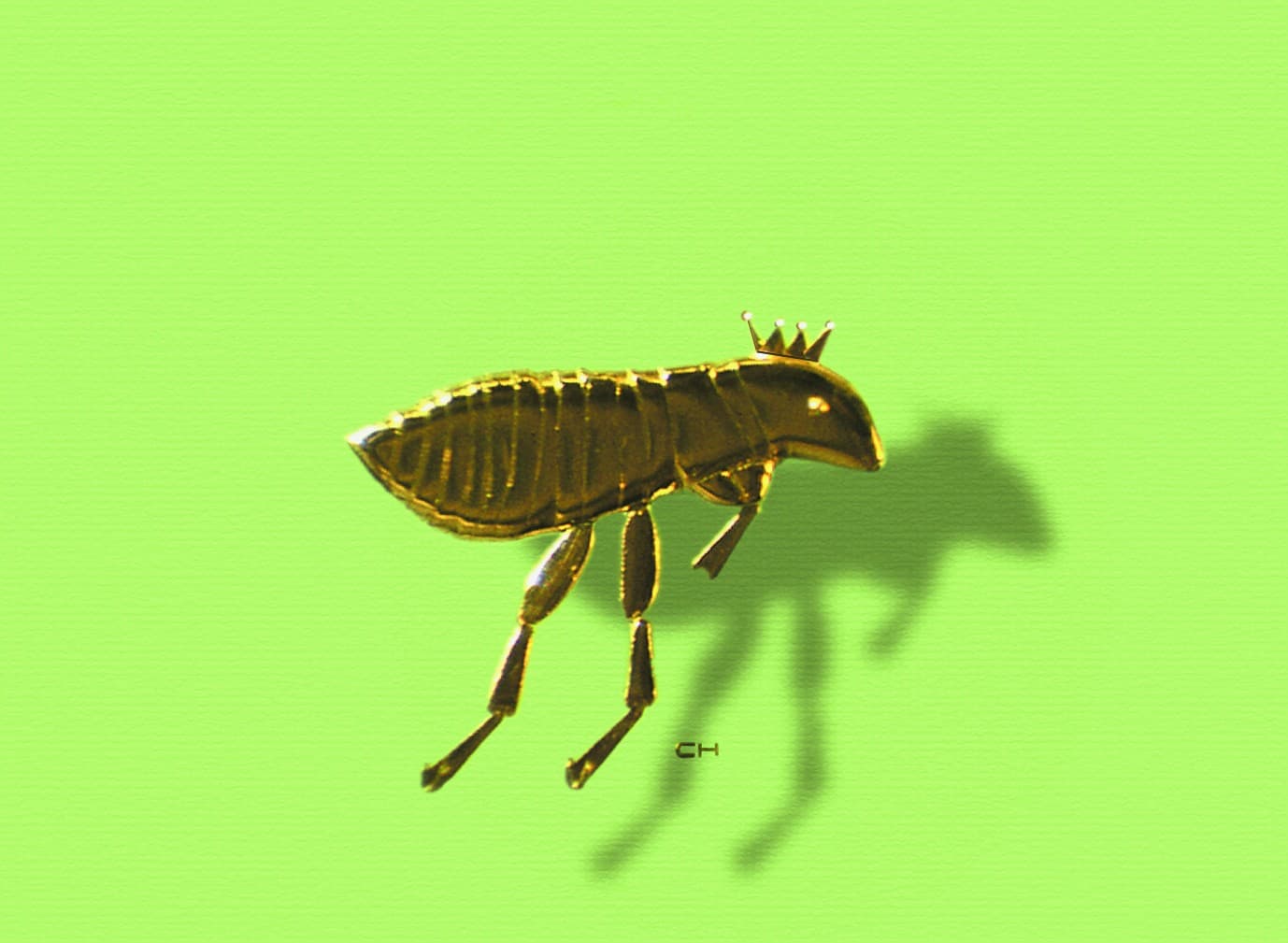
The shod golden flea
A life-size golden flea with tiny golden horseshoes.
Say this
The horseshoes are about 50 microns; the nails are in the size range of red blood cells. The humour lands immediately.
If they ask
Maker challenge
Each horseshoe is about 50 microns, and the tiny nails are close to the size range of red blood cells.
Literary background
The work refers to Nikolai Leskov’s tale of the left-handed craftsman and the steel flea, where shoeing a flea means impossible skill.
Two versions
The Kyiv original uses a real prepared flea; Szentendre shows the fully gold version, made so the wonder can be seen here too.
Guide cue
The story works for adults and children alike: a folktale impossibility becomes real craftsmanship.
6. · 1988
Map of Australia
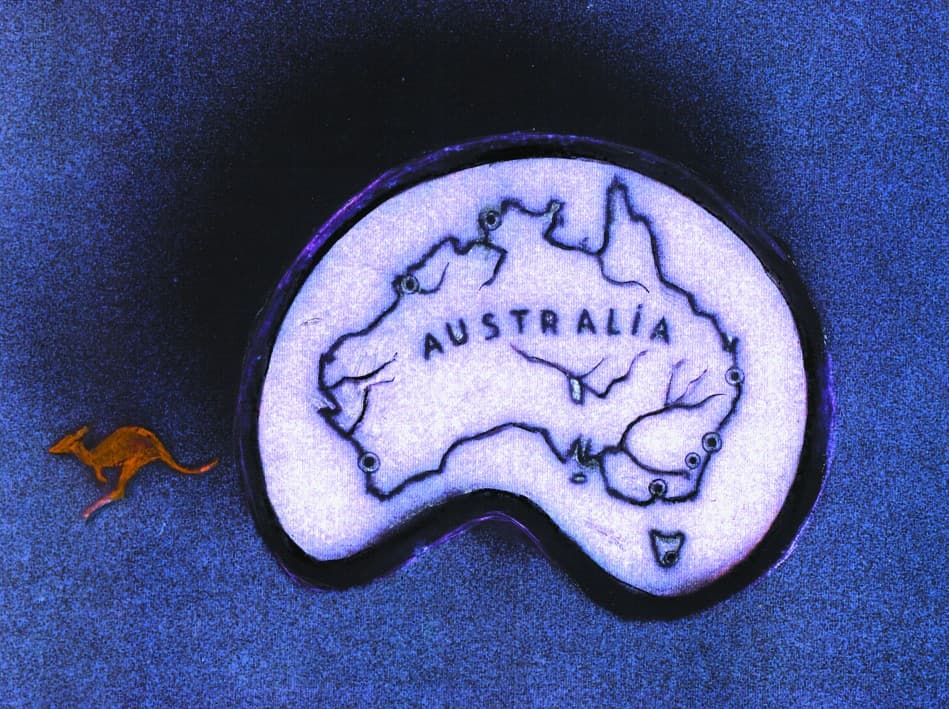
An engraved map on glass inside half a poppy seed, with a gold kangaroo.
Say this
Created for an international audience: a whole continent inside a seed. The city dots mark Australia’s major cities.
If they ask
Maker challenge
The map was engraved on glass; one wrong movement could have cracked the brittle surface.
Scale
The letters of AUSTRALIA are about 3 microns thick, while the whole continent appears inside half a poppy seed.
World fair link
The work connects to Brisbane EXPO 88: a diplomatic and artistic gesture, a continent inside a micro-world.
Detail
The points on the map refer to Australia’s major cities, while the gold kangaroo is an instantly readable cultural sign.
7. · 1980
Taras Shevchenko
A portrait carved in a sloe seed shell.
Say this
A national cultural symbol rendered on an almost impossible surface, using only carving depth and polish for light and shadow.
If they ask
Maker challenge
A human face had to be carved into a hard, uneven organic shell without cracking it.
Technique
Light and shadow come from carving depth and polished surfaces, not from paint.
Meaning
Taras Shevchenko stands for resistance, national identity and poetry; the candle flame evokes knowledge and hope.
Material
Sloe seed shell is dry and hard, making it a more lasting support than softer seeds.
8. · 1983
Kobzar
A miniature book connected to Shevchenko’s poetry.
Say this
The book links precision craft with poetry and national memory: tiny pages, spider-web binding and a flower-petal cover.
If they ask
Maker challenge
The pages had to be bound so the book kept its structure while remaining unbelievably small.
Materials
The cover is linked to a flower petal and the binding to spider web: fragile natural materials holding a cultural monument.
Cultural background
Kobzar is tied to Taras Shevchenko’s poetry and Ukrainian national memory.
Meaning
The book compresses the idea that culture can be fragile and enduring at the same time.
9. · 1997
Rendezvous
A couple meeting on a sugar crystal.
Say this
A fragile, everyday grain becomes a stage for a tiny human scene: sweet, delicate and temporary.
If they ask
Maker challenge
The sugar crystal is brittle, porous and vulnerable to moisture, so even breath could become a problem.
Scale
The whole scene stands on one sugar crystal, with the gold jug, glasses and tiny objects as separate micro-elements.
Meaning
The sugar is a perfect metaphor: a rendezvous is sweet, fragile and temporary.
Guide cue
Ask “What is this standing on?” The answer, sugar, usually creates the right kind of surprise.
10. · 1980
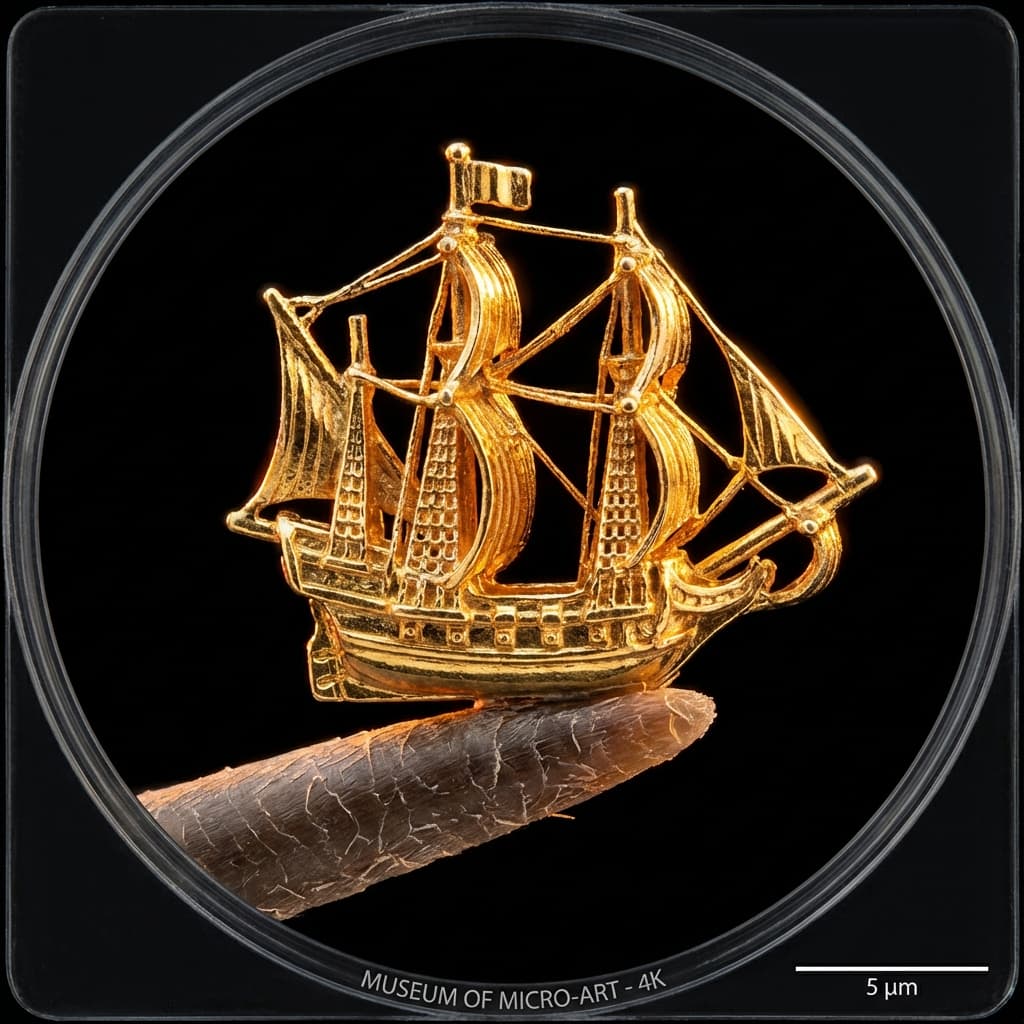
Sailing boat
A miniature composition inside a rice grain.
Say this
Four separate gold elements are placed into a hollowed rice grain: an everyday grain becomes a whole exhibition space.
If they ask
Maker challenge
A rice grain had to be split, hollowed and prepared as a tiny interior space.
Technique
This is not a flat picture but a three-dimensional gold diorama: girl, boat, sail and bird.
Meaning
The sea suggests freedom and the unknown future, hidden inside an ordinary grain of rice.
Guide cue
Emphasise that visitors are looking at a tiny stage, not a tiny painting.
11. · 1962
Peace!
The word Peace in five languages on a 3 mm human hair, with a golden laurel branch.
Say this
Created around the Cuban Missile Crisis: the world’s peace hanging by a hair.
If they ask
Maker challenge
The human hair had to be polished flat and smooth enough to become an engravable surface.
Scale
The letters are about 5 microns high, smaller than a red blood cell.
Historical background
Created in 1962 around the Cuban Missile Crisis, the message of peace literally rests on a hair.
Meaning
The golden laurel branch, an ancient symbol of peace, bends protectively over the fragile message.
12. · 1981
Abraham Lincoln
Lincoln’s portrait carved from a sloe seed shell.
Say this
A universal symbol of freedom and human rights on a 3 x 3 mm relief.
If they ask
Maker challenge
Lincoln’s expressive features had to remain recognisable on a 3 x 3 mm organic surface.
Technique
The relief effect comes from carving depth and light reflection, not painted shading.
Meaning
Lincoln represents freedom, equality and human rights, making the work more than an American reference.
Guide cue
It pairs well with the Shevchenko portrait: two national memories in the same modest natural material.
13. · 2002
Life
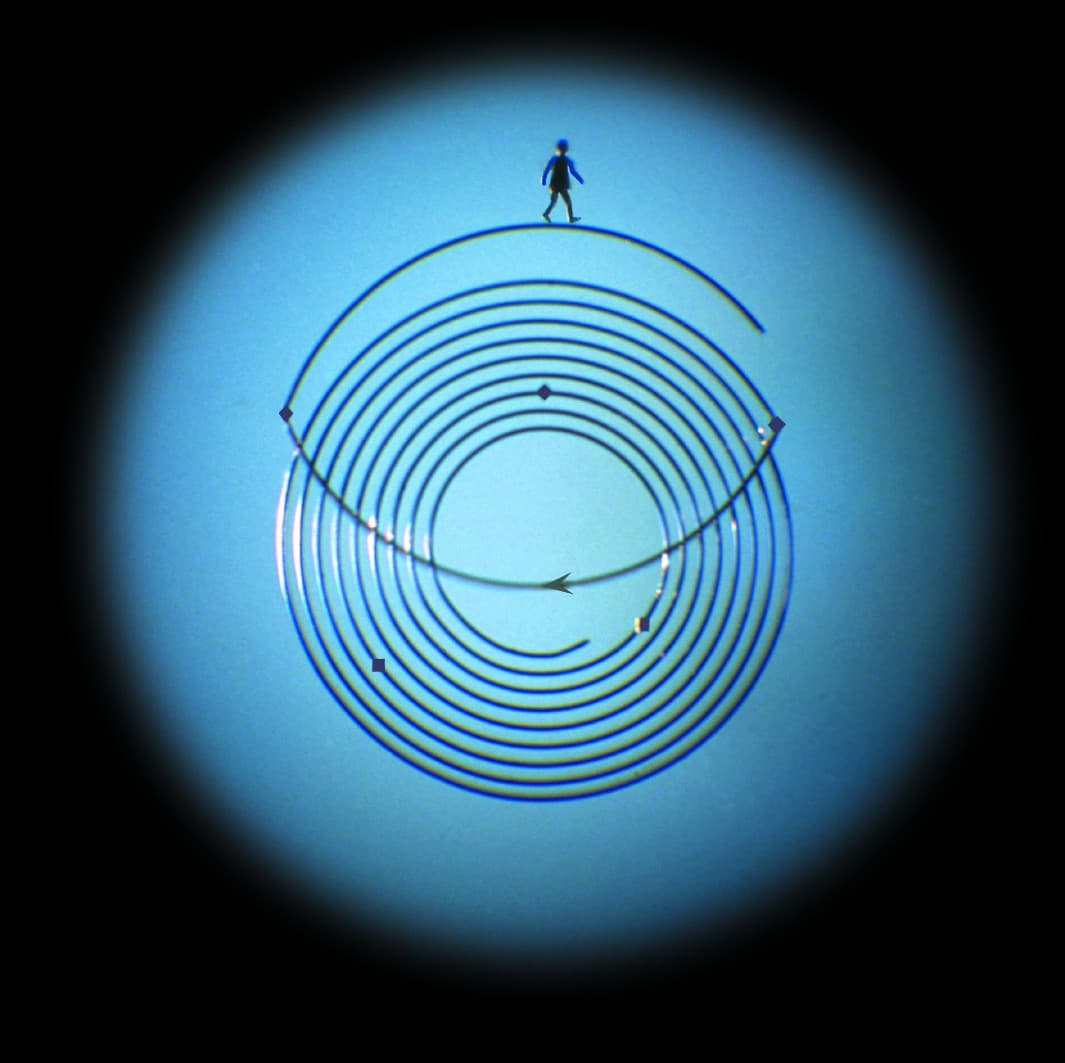
A golden human figure walking on a watch hairspring.
Say this
The spiral spring becomes time itself; the figure is only about 5 microns wide.
If they ask
Maker challenge
The 5-micron gold figure had to be fixed onto a flexible watch hairspring.
Scale
The figure is narrower than a red blood cell; dozens could fit across a single human hair.
Meaning
The hairspring is the heart of a mechanical watch. The human figure walking the spiral becomes an image of life passing through time.
Guide cue
For reflective groups, this can be the quiet emotional peak of the exhibition.
14. · 1990
Swallow family
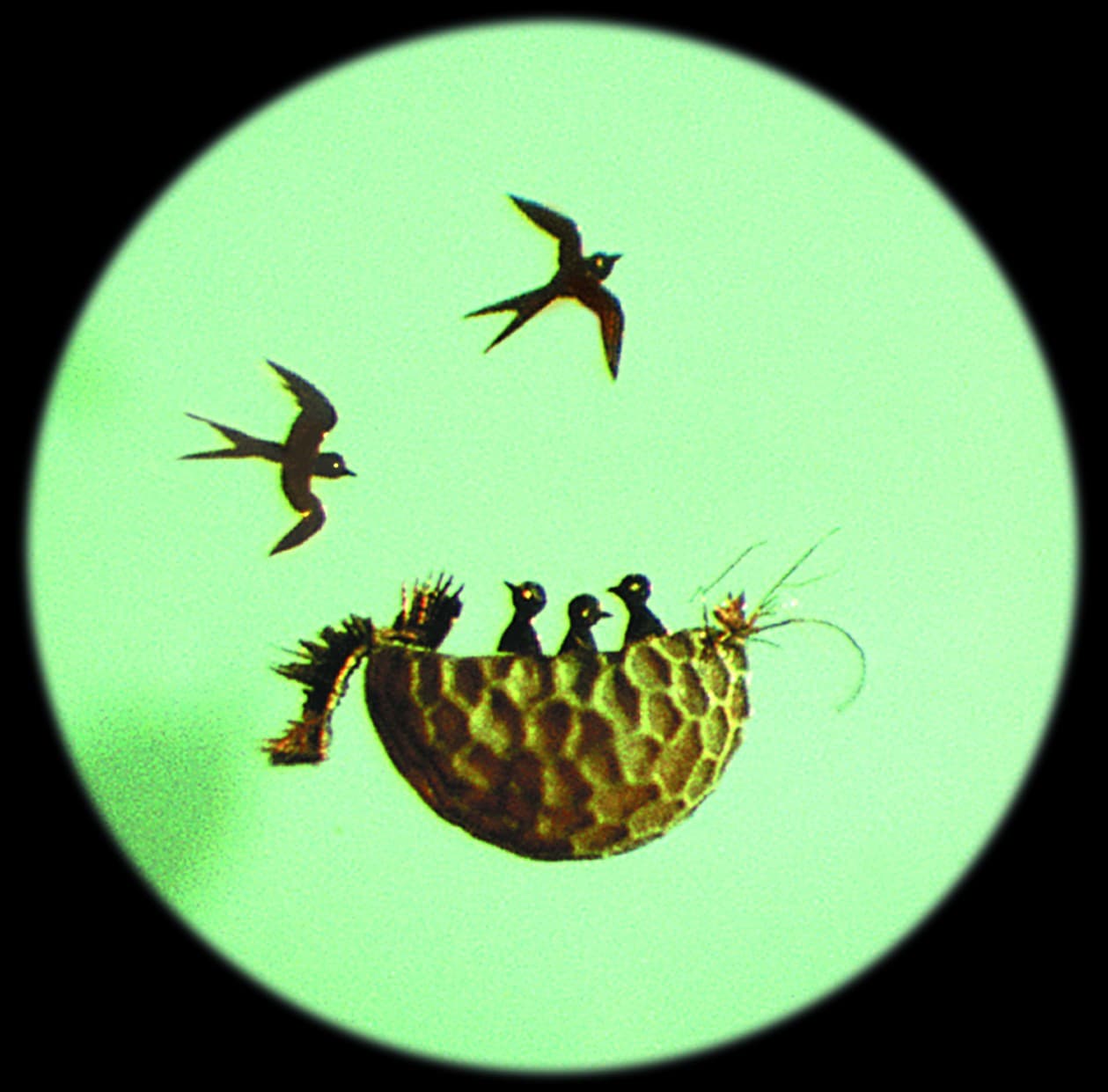
A golden swallow family in half a poppy seed.
Say this
A favourite with children: count the nestlings under the microscope.
If they ask
Maker challenge
Seven separate gold figures had to be created: two adult swallows and five nestlings.
Technique
The nest texture was formed microscopically inside the poppy seed to evoke mud and straw.
Meaning
The swallow suggests spring, renewal and home; half a poppy seed becomes a family scene.
Guide cue
For children, ask them to count the nestlings: five hungry beaks in half a poppy seed.
15. · 1969
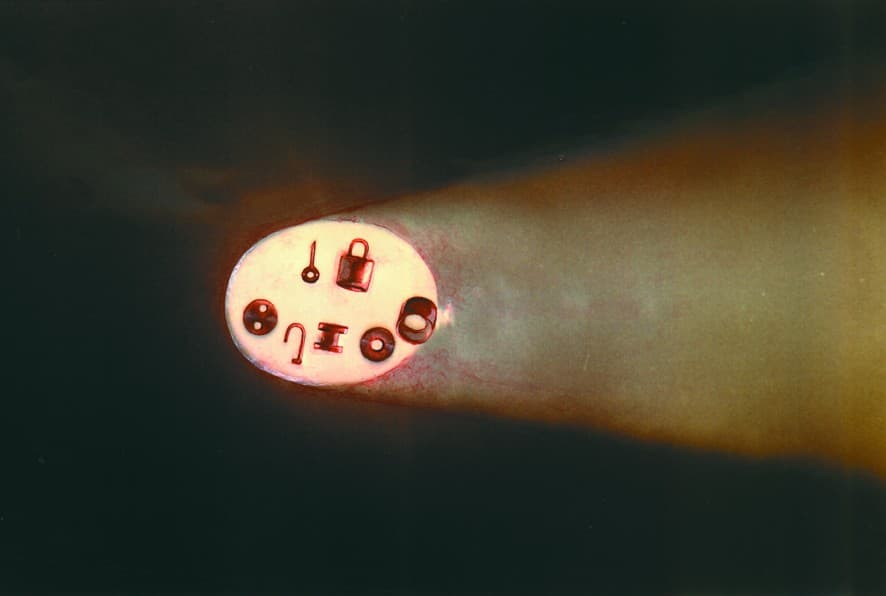
Golden padlock
A padlock and its parts on the cross-section of a human hair.
Say this
A strong closing work: not only tiny, but built with real mechanical logic.
If they ask
Maker challenge
The cross-section of the hair had to be cut perfectly smooth to become a stable 0.08 mm stage.
Technique
The shackle, lock body, springs and key were made separately from gold, making this one of the most structurally complex works.
Meaning
The lock and key suggest secrets and solutions. Taken apart, they show that even complex mysteries are made of small parts.
Closing line
A strong finale: it is not only tiny, it has mechanical logic. From one gram of gold, a whole town could receive locks at this scale.
Beyond Szentendre
World-travelling stories
A few internationally known stories work beautifully alongside the Szentendre exhibition.
Vatican
The portrait of Pope John Paul II was carved in a sloe seed shell and sent as a gift to the Vatican.
Gifhorn
The windmill contains 203 gold parts on half a poppy seed.
Expo 67
The world’s smallest working electric motor is connected to Montreal.
Interpretive threads
Legends and deeper stories
These stories give the guiding material its deeper layer: not only technical bravura, but culture, freedom and memory.
The Vatican treasure
The sloe-seed portrait of Pope John Paul II was sent to the Vatican as a gift, and the pope answered with an official letter of thanks.
The tale that became real
The shod flea had been a symbol of impossible craftsmanship in Eastern European storytelling. Syadristy made the impossibility real.
Poetry as the invisible second exhibition
Syadristy wrote poems for several works and also authored inscriptions for the Holodomor memorial in Kyiv.
The art of silence
In the Soviet era, individual, non-utilitarian micro-art can also be read as quiet freedom: what could not be said monumentally could be made on the head of a pin.
Common questions
FAQ
Are these really the original works?
Yes. Every dome contains the original work, with only a few explicitly explained exceptions connected to works held elsewhere.
How can this be made by hand?
With custom micro-tools under strong magnification, using an exceptional method: the finest movements are made between heartbeats while controlling breath.
How long does one work take?
Often half a year to a year, plus weeks or months spent creating the special tools.
What are the works made of?
Mostly gold and platinum, with carriers such as sloe seed, apple seed, poppy seed, rice grain, sugar crystal, human hair and glass.
Where else can this be seen?
Permanent Syadristy exhibitions exist in only three countries: Kyiv, Andorra and Szentendre.
Can visitors take photos?
Phone photography through the microscopes is often possible as an experience; staff will explain the current house rules on arrival.
Can children enjoy it?
Very much. The shod flea, the caravan in a needle eye, the swallow family and the rendezvous on a sugar crystal are usually favourites.
Practical information
2000 Szentendre, Gorog utca 4.
Open daily 10:00-18:00.
Average visit length: about 20-30 minutes.
From Budapest: H5 suburban railway to Szentendre, then about 10 minutes on foot.
For coach groups, advance coordination is recommended because of old-town traffic rules.
Parking: Danube promenade, Paprikabiro Street large car park or Teatrum car park.
Contact
+36 70 935 5155
info@mikrocsodak.hu
mikrocsodak.hu
Suggested guiding flow
0-2 min: Opening: 15 works, microscopes, original objects.
2-5 min: The artist: artist, engineer, sportsman, poet.
5-25 min: Rotate through the microscopes with scale and material stories.
25-30 min: Closing: Vatican, world exhibitions, then return to the motto.
Artwork protection
Do not lean on or pull the microscopes; only the focusing ring should be turned gently.
Do not touch or press the glass domes.
For smaller children, staff can provide a step stool; climbing on the display structure is not allowed.
No running or eating in the exhibition room.
Groups should always book in advance to avoid congestion.
Collapsible version
Pocket version
A compact collapsible version for guides on the phone or for quick briefing before arrival.
Quick opening+
Central Europe’s only permanent micro-miniature collection: short, memorable and easy to schedule in the heart of Szentendre.
“I was there, I saw it, but I still cannot believe it.”
The 15 works+
1. · 1974 Caravan: A camel caravan with a palm tree and pyramid in the eye of an ordinary sewing needle.
2. · 1979 Flowering branch: A watercolour branch painted inside a halved apple seed.
3. · 1973 Chess: The world’s tiniest chess set on the head of a pin.
4. · 2002 Coca-Cola bottle: A gold Coca-Cola bottle, 1.65 mm high, with a 0.7 mm logo.
5. · 1959 The shod golden flea: A life-size golden flea with tiny golden horseshoes.
6. · 1988 Map of Australia: An engraved map on glass inside half a poppy seed, with a gold kangaroo.
7. · 1980 Taras Shevchenko: A portrait carved in a sloe seed shell.
8. · 1983 Kobzar: A miniature book connected to Shevchenko’s poetry.
9. · 1997 Rendezvous: A couple meeting on a sugar crystal.
10. · 1980 Sailing boat: A miniature composition inside a rice grain.
11. · 1962 Peace!: The word Peace in five languages on a 3 mm human hair, with a golden laurel branch.
12. · 1981 Abraham Lincoln: Lincoln’s portrait carved from a sloe seed shell.
13. · 2002 Life: A golden human figure walking on a watch hairspring.
14. · 1990 Swallow family: A golden swallow family in half a poppy seed.
15. · 1969 Golden padlock: A padlock and its parts on the cross-section of a human hair.
FAQ+
Are these really the original works? Yes. Every dome contains the original work, with only a few explicitly explained exceptions connected to works held elsewhere.
How can this be made by hand? With custom micro-tools under strong magnification, using an exceptional method: the finest movements are made between heartbeats while controlling breath.
How long does one work take? Often half a year to a year, plus weeks or months spent creating the special tools.
What are the works made of? Mostly gold and platinum, with carriers such as sloe seed, apple seed, poppy seed, rice grain, sugar crystal, human hair and glass.
Where else can this be seen? Permanent Syadristy exhibitions exist in only three countries: Kyiv, Andorra and Szentendre.
Can visitors take photos? Phone photography through the microscopes is often possible as an experience; staff will explain the current house rules on arrival.
Can children enjoy it? Very much. The shod flea, the caravan in a needle eye, the swallow family and the rendezvous on a sugar crystal are usually favourites.
Suggested guiding flow+
0-2 min · Opening: 15 works, microscopes, original objects.
2-5 min · The artist: artist, engineer, sportsman, poet.
5-25 min · Rotate through the microscopes with scale and material stories.
25-30 min · Closing: Vatican, world exhibitions, then return to the motto.
Practical information+
2000 Szentendre, Gorog utca 4.
Open daily 10:00-18:00.
Average visit length: about 20-30 minutes.
From Budapest: H5 suburban railway to Szentendre, then about 10 minutes on foot.
For coach groups, advance coordination is recommended because of old-town traffic rules.
Parking: Danube promenade, Paprikabiro Street large car park or Teatrum car park.